Context
Pleo was moving upmarket. The product needed to support companies with 250+ employees, where manual user and team management no longer scaled. Manual operations became a bottleneck: admins had to invite users, manage teams, and keep approval structures updated by hand. This created security risks, misaligned approvals, and high administrative overhead.
My role
I was the lead designer for the project. I led the Level 2 work with engineering, customer interviews, research, beta rollout, and stakeholder alignment through PRG documents.
Problem
Larger companies needed Pleo to reflect their real organisation. User access, teams, and reviewers had to stay aligned with the customer's HRIS system. Level 1 solved user provisioning. Level 2 expanded this into organisational mapping: teams, managers, and reviewers.
What shipped
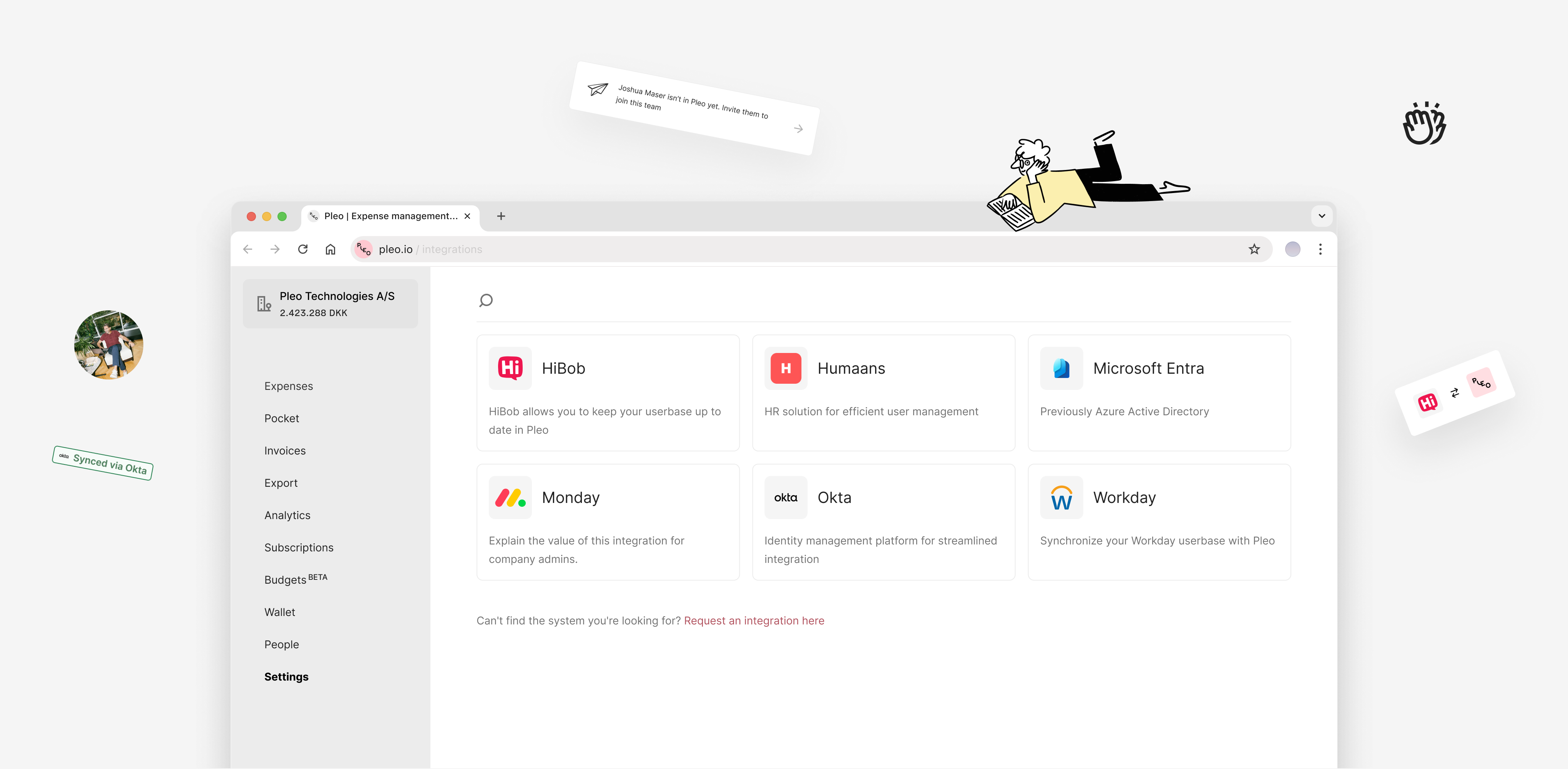
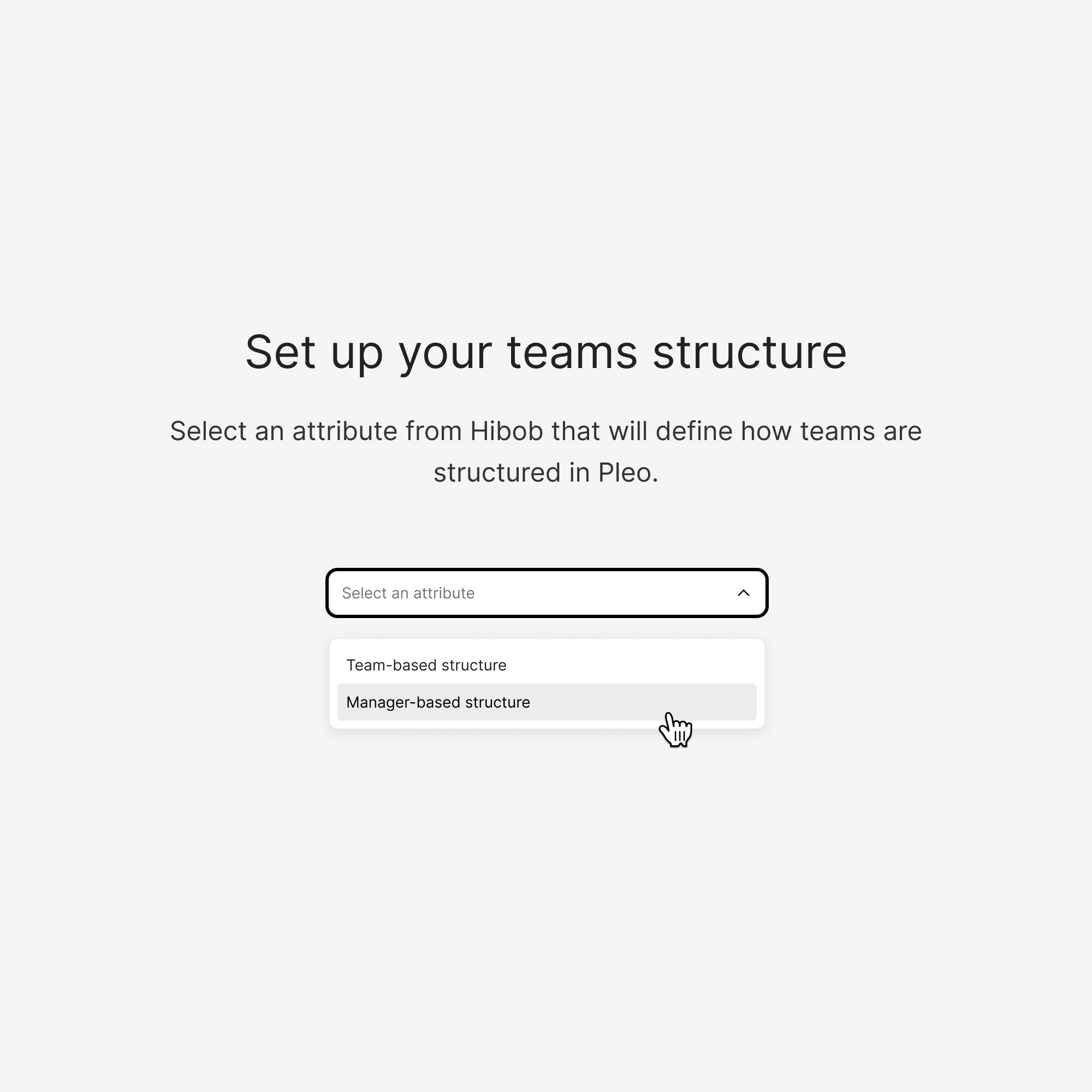
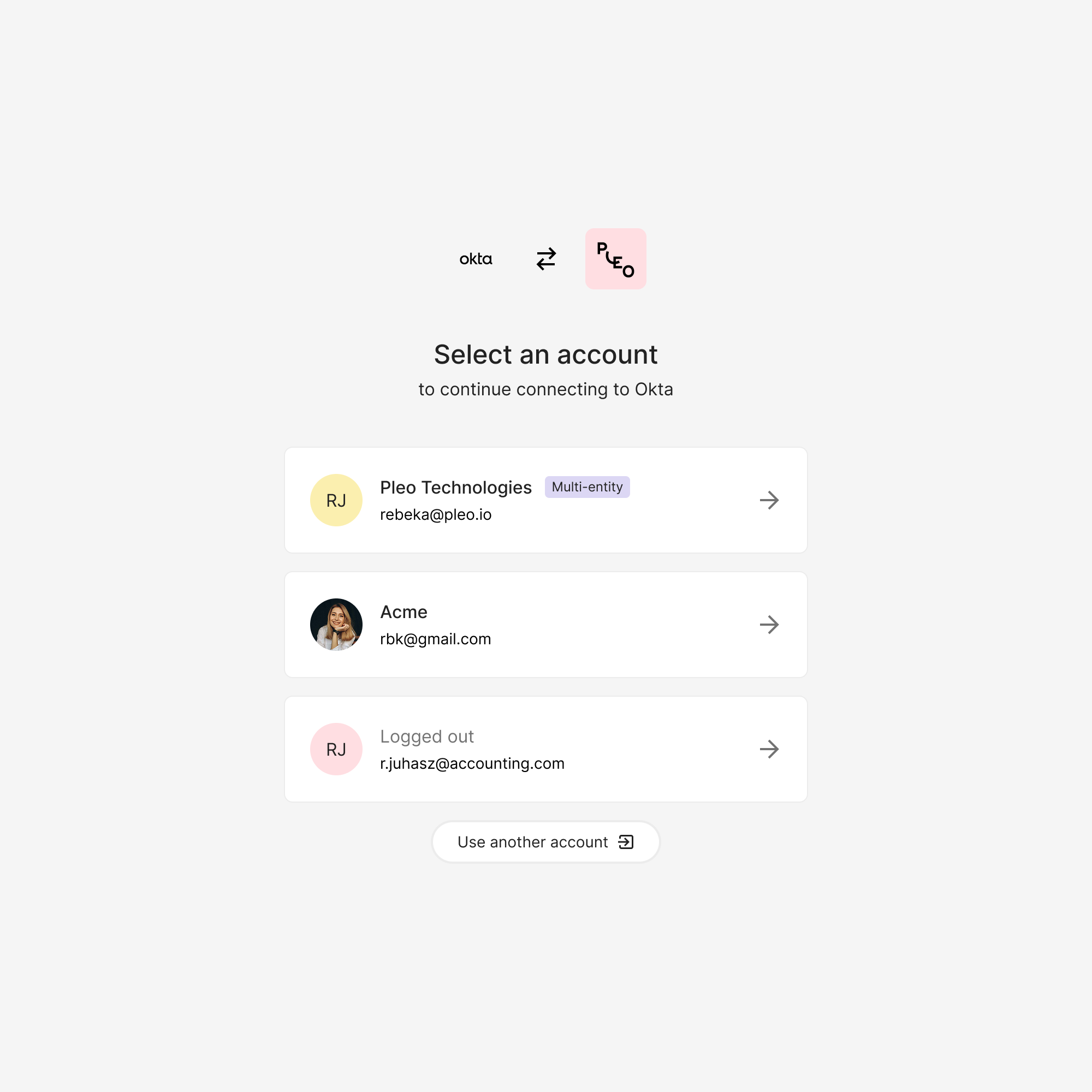
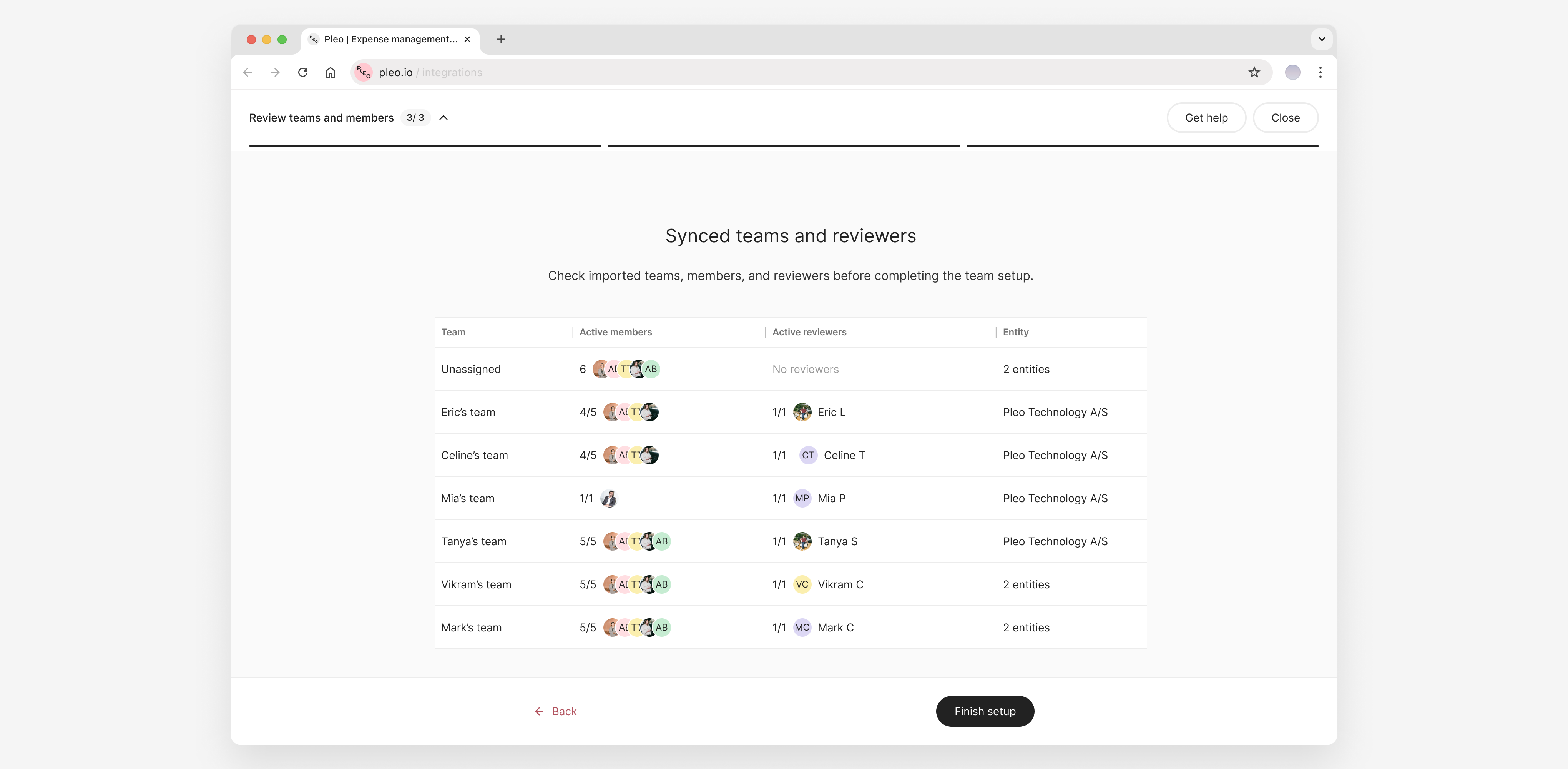
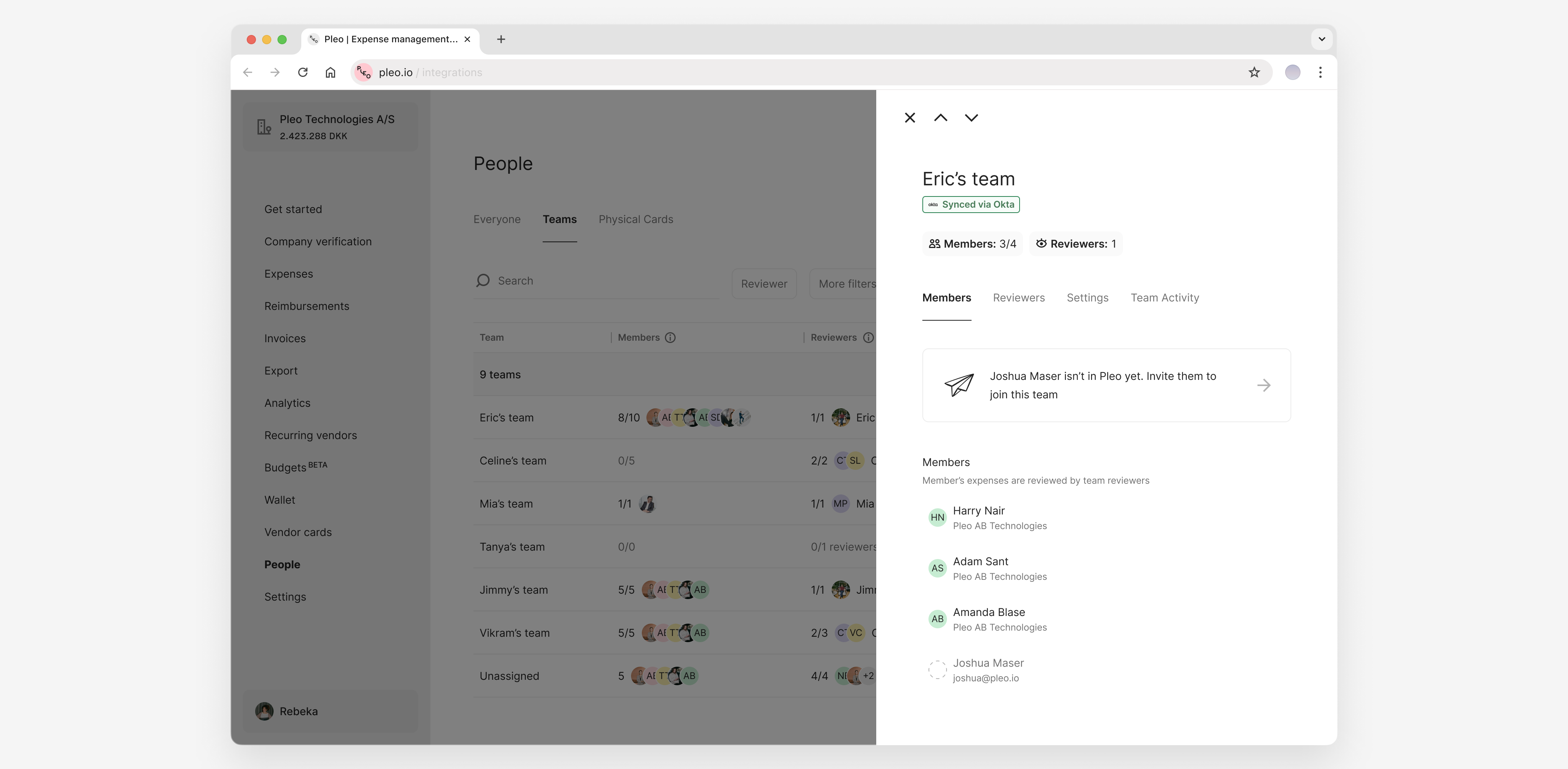
We created an integration area where admins could connect an HRIS system and use it as the source of truth. From there, admins could sync users into Pleo and add people directly from the People tab. For Level 2, we introduced manager-based team setup. Admins could preview synced teams, reviewers, changes, and fallback states before committing to the setup.
Tradeoffs
For Level 1, we chose breadth over depth. Pleo supported more HRIS systems, but kept the first version focused on user provisioning only. For Level 2, we added more upfront steps. This made setup slower, but gave admins more control and trust before automation took over.
Outcome
- 35% HRIS integration adoption among eligible customers.
- +16% User-base growth with Level 1 and Level 2 integrations.
- 7% Enterprise customer growth.
Learnings
✽ The value was not always obvious upfront.
For Level 1, admins found offboarding more valuable than onboarding because it reduced the risk of former employees keeping active Pleo cards.
✽ Automation needs trust.
Users need transparency, previews, activity logs, and graceful fallbacks to feel in control.
✽ Integrations increase product complexity.
Even when errors come from third-party systems, users experience them inside Pleo, so Pleo becomes responsible for handling them clearly.